
Single Tooth Implants in Chicago, IL and Skokie, IL
Losing a single tooth can change the appearance of a smile. Beyond that, it can make chewing less comfortable, affect how neighboring teeth come together, and leave patients feeling self-conscious about an otherwise healthy smile. A single tooth implant offers a stable, natural-looking way to replace the missing tooth without relying on the surrounding teeth for support.
At Oral and Facial Surgery of the NorthShore, Dr. Stephen Martin combines advanced surgical training with modern implant technology to carefully rebuild the foundation of a missing tooth. Unlike a removable replacement or a traditional bridge, a dental implant replaces the tooth at its root, creating a secure foundation for a custom crown while helping maintain jaw health and structure.
Patients considering a single tooth implant in Chicago, IL, or Skokie, IL, are invited to call (224) 623-0709 or complete our online consultation form to learn more about their options.
Quick Links
What Is a Single Tooth Implant?
A single tooth implant is a permanent tooth-replacement solution designed for patients who are missing one tooth or need to have one non-restorable tooth removed.
The restoration has several parts. The dental implant itself is a small post placed into the jawbone to replace the missing tooth root. As the area heals, the bone gradually integrates with the implant, creating a stable foundation. An abutment connects the implant to a custom dental crown, which becomes the visible portion of the new tooth.
Since the implant stands independently, neighboring healthy teeth generally do not need to be altered to support the replacement. This is one key difference between an implant and a traditional dental bridge.
Single tooth treatment is part of the broader range of dental implant options available at Oral and Facial Surgery of the NorthShore. Dr. Martin evaluates the missing tooth, surrounding bone, gum tissue, bite, and neighboring structures before recommending the most appropriate approach.
Benefits of Single Tooth Implants Chicago NorthShore
For patients who are missing only one tooth, an implant can restore the space while helping preserve the rest of the smile.
A Natural Appearance
Once restored with a carefully designed crown, a single tooth implant is intended to blend naturally with the surrounding teeth. The size, shape, and appearance of the final restoration can be planned to complement the patient’s existing smile.
Strong, Stable Function
Because the implant is anchored in the jawbone, it creates a stable foundation that lets patients chew and speak comfortably without relying on a removable appliance.
Preservation of Healthy Neighboring Teeth
A traditional bridge may require reshaping the teeth on either side of the gap, so they can support the restoration. A single implant replaces the missing tooth independently, helping preserve healthy tooth structure.
Support for the Jawbone
Natural tooth roots provide stimulation to the jawbone during everyday function. After a tooth is lost, the surrounding bone can gradually change. Replacing the missing root with an implant helps preserve support in the area.
Improved Dental Alignment
An open space can allow neighboring teeth to slowly drift or tip toward the missing tooth. Replacing the tooth helps maintain appropriate spacing and bite relationships.
A Long-Term Solution
With proper oral hygiene, routine dental care, and healthy habits, dental implants are designed to provide durable, long-term tooth replacement.
How Does a Single Tooth Implant Work?
A successful dental implant begins with the foundation beneath the visible smile.
Dr. Martin places the implant into a carefully planned position within the jawbone. Over the following weeks and months, the implant becomes integrated with the surrounding bone through a natural healing process known as osseointegration. Once that foundation is stable, the implant can support the final crown.
Planning is especially important because an implant must fit within a relatively small area while respecting the neighboring tooth roots, available bone, gum tissue, and other important anatomy.
Dr. Martin uses advanced imaging and may incorporate 3D guided implant surgery to evaluate the surgical area and plan implant positioning before treatment begins. His practice also incorporates digital navigation and 3D technology when appropriate to support precise and predictable placement.
Candidates for a Single Tooth Implant
Single tooth implants may be appropriate for adults who have already lost one tooth or have a tooth that can no longer be predictably restored.
Good candidates commonly have:
- One missing or non-restorable tooth
- Healthy gum tissue
- Adequate jawbone to support an implant
- Good overall health
- A commitment to regular brushing, flossing, and dental care
- Realistic expectations about the treatment and healing process
Patients who have experienced bone loss may still be candidates. In some cases, bone and soft tissue grafting can rebuild or preserve the support needed for successful implant placement.
The consultation is designed to determine what is appropriate for the individual rather than applying the same treatment plan to every patient. Dr. Martin reviews imaging, examines the mouth, discusses the patient’s health history, and explains the available options, so the patient can make an informed decision without feeling rushed.
Schedule a Consultation
From wisdom teeth to complex facial procedures, Dr. Stephen Martin delivers precise, compassionate surgical care designed to restore comfort, function, and confidence. We invite you to schedule your consultation by calling (224) 623-0709 or completing our convenient consultation form.
What Happens During Single Tooth Implant Treatment?
Single tooth implant treatment can involve several stages depending on whether the tooth has already been removed, the condition of the surrounding bone, and whether additional preparation is needed.
Consultation and Digital Planning
Treatment begins with a detailed examination and imaging. Dr. Martin evaluates the missing tooth site, jawbone, gum tissue, nearby roots, and other anatomy.
Visual aids and imaging are used to help patients understand what is happening beneath the gums and why a particular approach is being recommended. Patients are given time to ask questions and become comfortable with the plan before moving forward.
Tooth Removal, If Necessary
If the damaged tooth is still present, it may first need to be carefully removed. Preserving healthy surrounding bone and tissue is an important part of preparing the site for an implant.
Some patients may qualify for an immediate dental implant, allowing Dr. Martin to place the implant at the same appointment as the extraction.
Other patients benefit from allowing the area additional time to heal before implant placement. Dr. Martin determines the safest and most predictable approach based on the condition of the tooth, bone, and surrounding tissues.
Bone Grafting When Needed
Bone quality and volume are important for implant stability. If additional support is needed, bone grafting may be performed before or at the time the implant is placed.
The extent of grafting can vary considerably. Some patients need no additional grafting, while others may require additional healing time before implant placement.
Implant Placement
Once the site has been prepared, Dr. Martin places the single tooth implant into the jawbone. Modern imaging and guided techniques help him select a position that supports both long-term stability and the final restoration.
Healing and Integration
The implant is then given time to integrate with the surrounding bone. Although patients can generally return to many normal activities well before this process is complete, the implant itself requires adequate healing before supporting the final crown.
A temporary tooth may be available in certain circumstances so that patients do not necessarily have to remain without a visible tooth during healing. The appropriate temporary option depends on the location of the implant and the stability achieved during placement.
Final Crown
Once Dr. Martin confirms that the implant has integrated appropriately, the restorative portion of treatment can move forward. A custom crown is attached to the implant to complete the replacement tooth.
Dr. Martin can coordinate the surgical portion of care with the patient’s restorative dentist, so each phase of treatment works toward the same functional and aesthetic result.
Before & Afters
Sedation Options for Single Tooth Implants
Comfort is an important part of the implant experience at Oral and Facial Surgery of the NorthShore. Some patients feel completely at ease with implant treatment, while others prefer additional support to help them relax.
Dr. Martin offers several sedation and anesthesia options and will recommend an approach based on the procedure, medical history, and the patient’s individual comfort level.
Local Anesthesia
Local anesthesia thoroughly numbs the surgical area so that the implant can be placed comfortably while the patient remains awake. Patients may notice light pressure or movement but should remain comfortable throughout the procedure.
Nitrous Oxide
Nitrous oxide can provide an additional level of relaxation while allowing patients to remain awake and responsive. Its effects typically diminish quickly once administration is stopped.
Oral Sedation
For patients who feel more anxious about oral surgery, prescribed oral medication can create a deeper feeling of relaxation. Transportation arrangements are generally required when oral sedation is used.
IV Sedation
IV sedation can provide a deeper level of relaxation and is particularly helpful for patients with significant dental anxiety or when implant placement is being combined with another procedure.
Dr. Martin discusses these options before treatment, so patients know exactly what to expect and feel confident about their care.
Single Tooth Implant Recovery
Recovery following a single dental implant is generally focused on allowing the surgical area to heal without unnecessary irritation.
Some swelling, tenderness, or minor soreness around the implant site can be expected during the first several days. These effects typically improve as healing progresses. Patients receive detailed instructions for oral hygiene, eating, activity, and caring for the surgical area before leaving the office.
A softer diet may be recommended initially, particularly if implant placement is combined with an extraction or bone graft. Patients should avoid chewing directly on the implant site until Dr. Martin advises that it is appropriate to do so.
Keeping the area clean is also an important part of recovery. Dr. Martin and the team review brushing and rinsing instructions carefully and remain available if questions arise after the procedure.
The visible surgical area may feel comfortable relatively quickly, but the deeper healing process takes longer. Osseointegration generally occurs over a period of months as the bone forms a stable connection with the implant. Dr. Martin monitors this process before the final restoration is completed.
How Much Does a Single Tooth Implant Cost in Chicago, IL?
The cost of a single tooth implant in Chicago, IL, or Skokie, IL, varies because treatment involves more than the implant post alone.
Factors that may influence the total cost include:
- Whether the damaged tooth first needs to be removed
- The amount and quality of available jawbone
- Whether bone grafting is required
- The type of imaging and surgical planning used
- Sedation or anesthesia
- The implant and associated surgical components
- The final crown or restoration
- Whether temporary tooth replacement is needed during healing
For this reason, an accurate treatment cost can only be provided after Dr. Martin evaluates the implant site and develops a personalized plan.
Dental insurance coverage also varies considerably between plans and between the different stages of implant treatment. Our team can help patients understand the proposed treatment plan and associated costs. Qualified patients may also have access to financing options through Cherry.
Why Choose Dr. Stephen Martin for Single Tooth Implants?
Replacing one tooth may sound straightforward, but successful implant surgery requires careful consideration of the bone, neighboring tooth roots, gum tissue, bite, and final restoration.
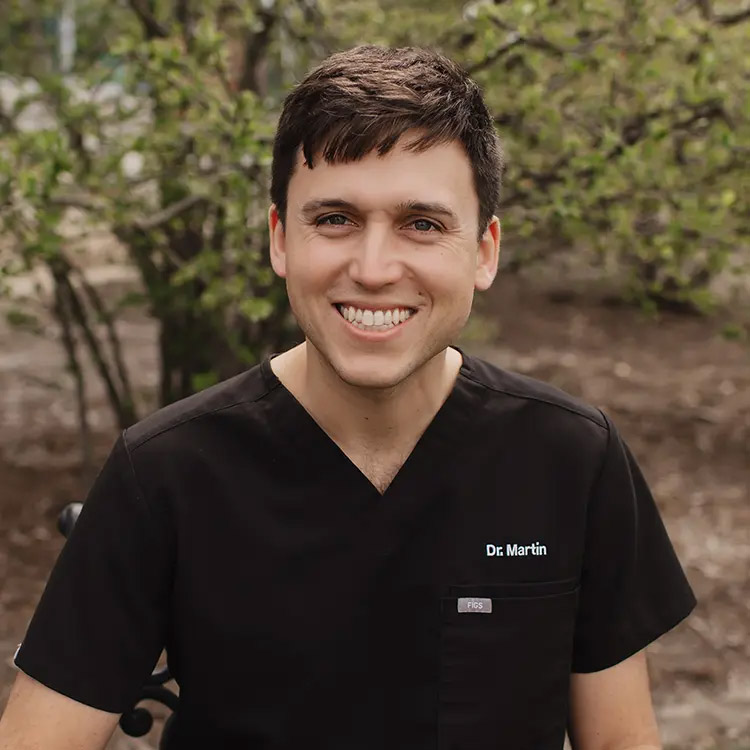
Dr. Stephen Martin is a board-certified oral and maxillofacial surgeon with advanced training in dentoalveolar surgery and dental implant placement. After graduating with honors from Furman University, he earned his dental degree from the Medical University of South Carolina, where he received recognition for outstanding performance in oral and maxillofacial surgery. He then completed a four-year residency at John H. Stroger Jr. Hospital of Cook County and Rush University Medical Center, serving as Chief Resident during his final year.
Dental implants are also a particular area of professional interest for Dr. Martin. He incorporates modern techniques, digital imaging, 3D planning, and guided implant technology when appropriate to help make treatment precise and predictable.
Technical experience, however, is only one part of the approach at Oral and Facial Surgery of the NorthShore.
Dr. Martin believes patients should feel cared for rather than simply treated. Consultations include thorough explanations and visual aids so that patients can understand what is happening, why treatment is being recommended, and what they can expect throughout the process. Whether the visit involves a single missing tooth or a complex reconstruction, questions are never considered too small, and patients are given the time needed to feel confident moving forward.
Schedule a Single Tooth Implant Consultation in Chicago, IL and Skokie, IL
For patients considering single tooth implants in Chicago, IL and Skokie, IL, Dr. Stephen Martin and the team at Oral and Facial Surgery of the NorthShore provide advanced implant care in a setting built around communication, comfort, and thoughtful attention.
Call (224) 623-0709 or request a consultation online to learn whether a single tooth implant is the right option. Our staff will do our best to get back to you in a timely manner.
Single Tooth Implant FAQs
Is a single tooth implant better than a dental bridge?
Both treatments can replace one missing tooth, but they work differently. A bridge uses neighboring teeth to support the replacement tooth, while an implant is supported independently by the jawbone. One advantage of an implant is that healthy neighboring teeth typically do not need to be reshaped solely to support the restoration. Dr. Martin can help patients understand the surgical considerations involved with implant treatment, while the patient’s restorative dentist can help compare the complete restorative options.
Can a single tooth implant be placed immediately after an extraction?
Sometimes. Immediate implant placement allows the damaged tooth to be removed and the dental implant placed during the same appointment. The area must have adequate bone, appropriate anatomy, and sufficient implant stability for this approach to be recommended. When those conditions are not present, allowing the extraction site to heal first may provide a more predictable result.
Will patients have to go without a tooth while the implant heals?
Not necessarily. Temporary tooth-replacement options may be available, especially when an implant is placed in a visible area of the smile. The appropriate temporary restoration depends on the implant’s location, stability, bite, and overall treatment plan.
How long does a single tooth implant take from start to finish?
The timeline varies considerably. Implant placement itself is only one part of the process. If an extraction or bone graft is necessary, additional healing may be needed before or after implant placement. The implant also requires time to integrate with the jawbone before the final crown is placed. Dr. Martin provides a more specific timeline after evaluating the individual treatment site.
Does every single tooth implant require bone grafting?
No. Patients with adequate healthy bone may be able to proceed directly with implant placement. Bone grafting is recommended when additional bone is needed to create sufficient support or preserve the shape of the treatment area.
How long can a single tooth implant last?
Dental implants are designed as a long-term tooth-replacement solution. Their longevity depends on several factors, including oral hygiene, gum and bone health, overall health, bite forces, smoking habits, and regular professional care. The crown attached to the implant may eventually require replacement even when the implant itself remains healthy and stable.